At the Table in Safad, 1946: Reading a Restaurant Menu as Palestinian Food History
A documentary historical study — Palestinian food memory
Download article PDFIn this article
 Scan to verify the article
A historical reference published by IUOAMC
Publisher: International Union of Arab Master Chefs (IUOAMC) · IUOAMC MEDIA Magazine.
Series: Palestinian Food Memory · Editorial edition: 1.2 · Article code: IUOAMC-ART-2026-8505.
Material prepared by the Kanaan Culinary Team — Palestine
Contributing Kanaan team members and their roles:
- Chef Ahmad Maher Abu Bakr · MC5585MS — original text.
- Chef Mais Barahmeh — team general management.
- Chef Ahmad Al Hasassna · MC6388MS — team adviser and preparation of the published article.
Language editing and rewriting: Chef Ahmad Issam Maadarani.
Language editing and rewriting: Chef Ahmad Issam Maadarani
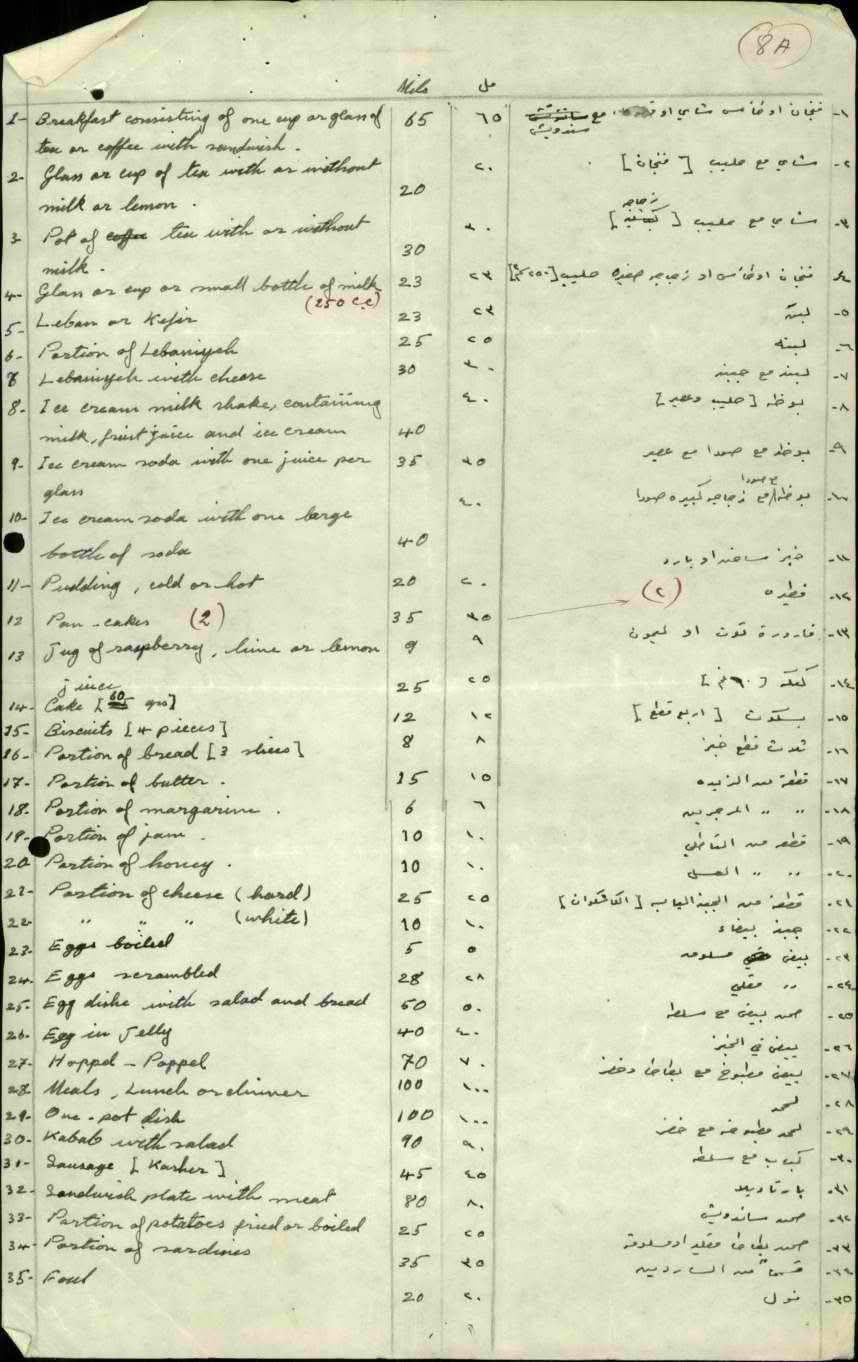
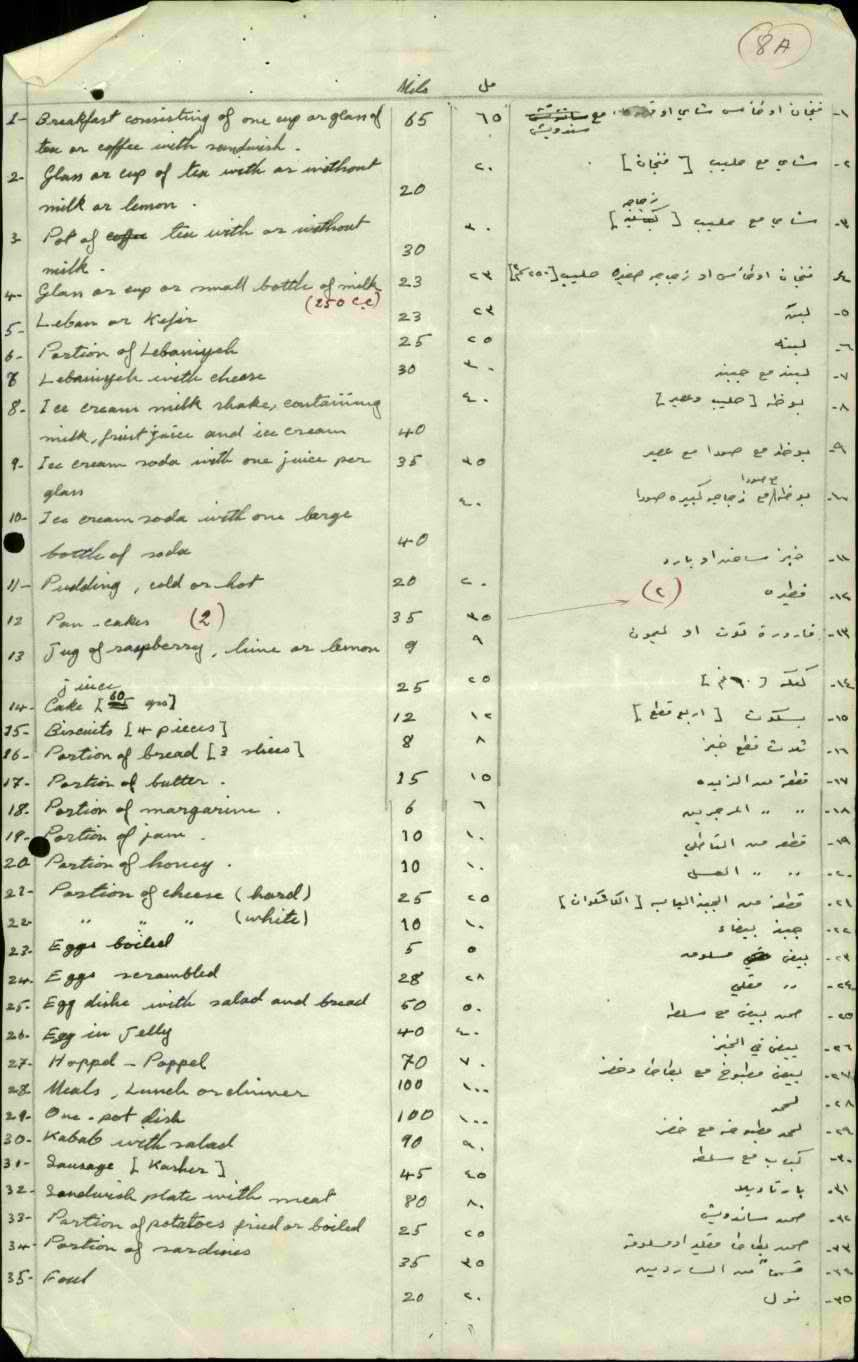
A small restaurant menu can open large questions about a city, its labour and its tastes. The two sheets reproduced here were supplied as a 1946 menu from Safad, Palestine, associated with proprietors Ahmad Darwish and Shukri al-Araj. They preserve food names and prices in Arabic and English, offering a view of hospitality as a practice of service, pricing and choice.
Document source: the collection supplied to the magazine identifies the sheets as a 1946 Safad restaurant menu associated with Ahmad Darwish and Shukri al-Araj. The following reading examines their organisation, dishes and prices.
A working document as historical evidence
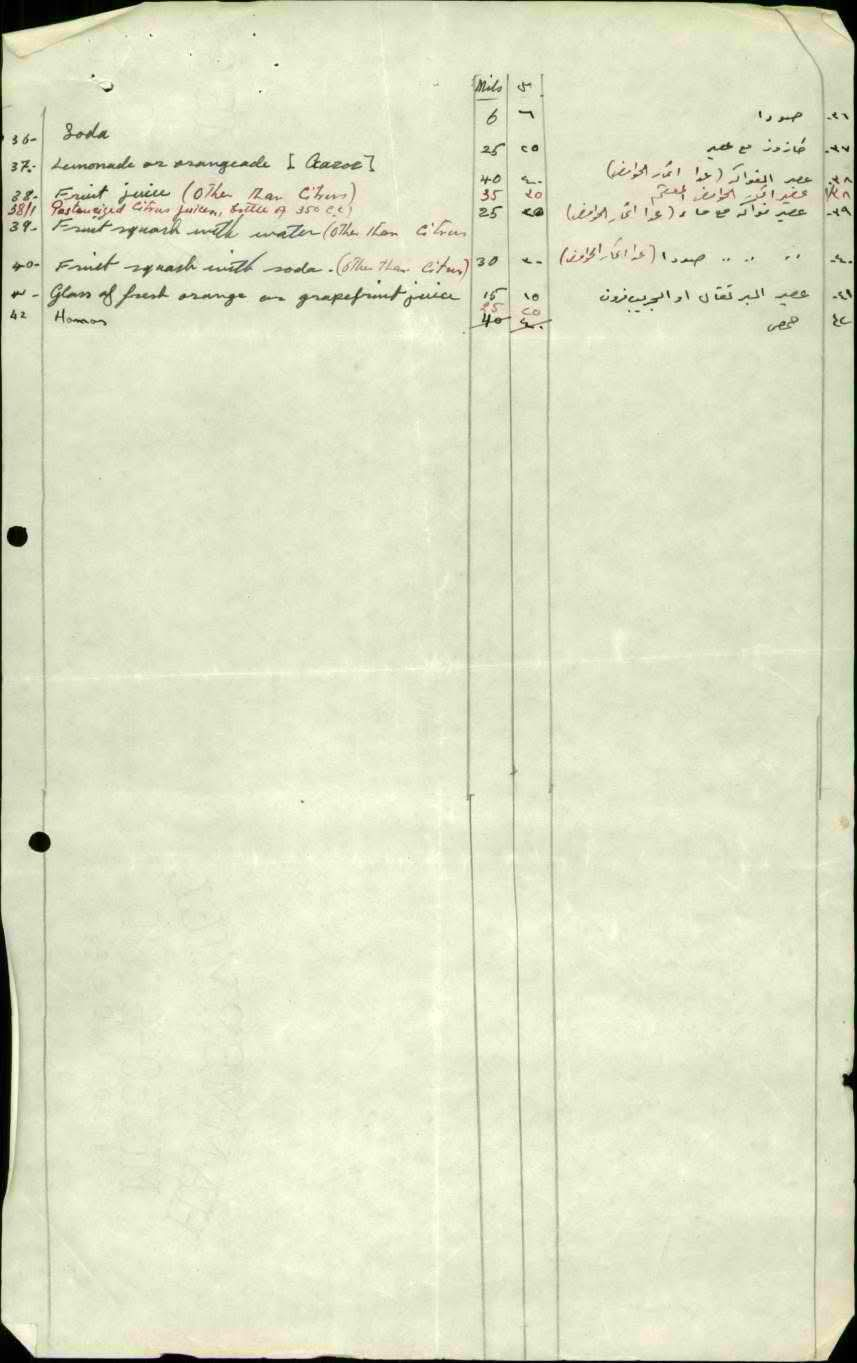
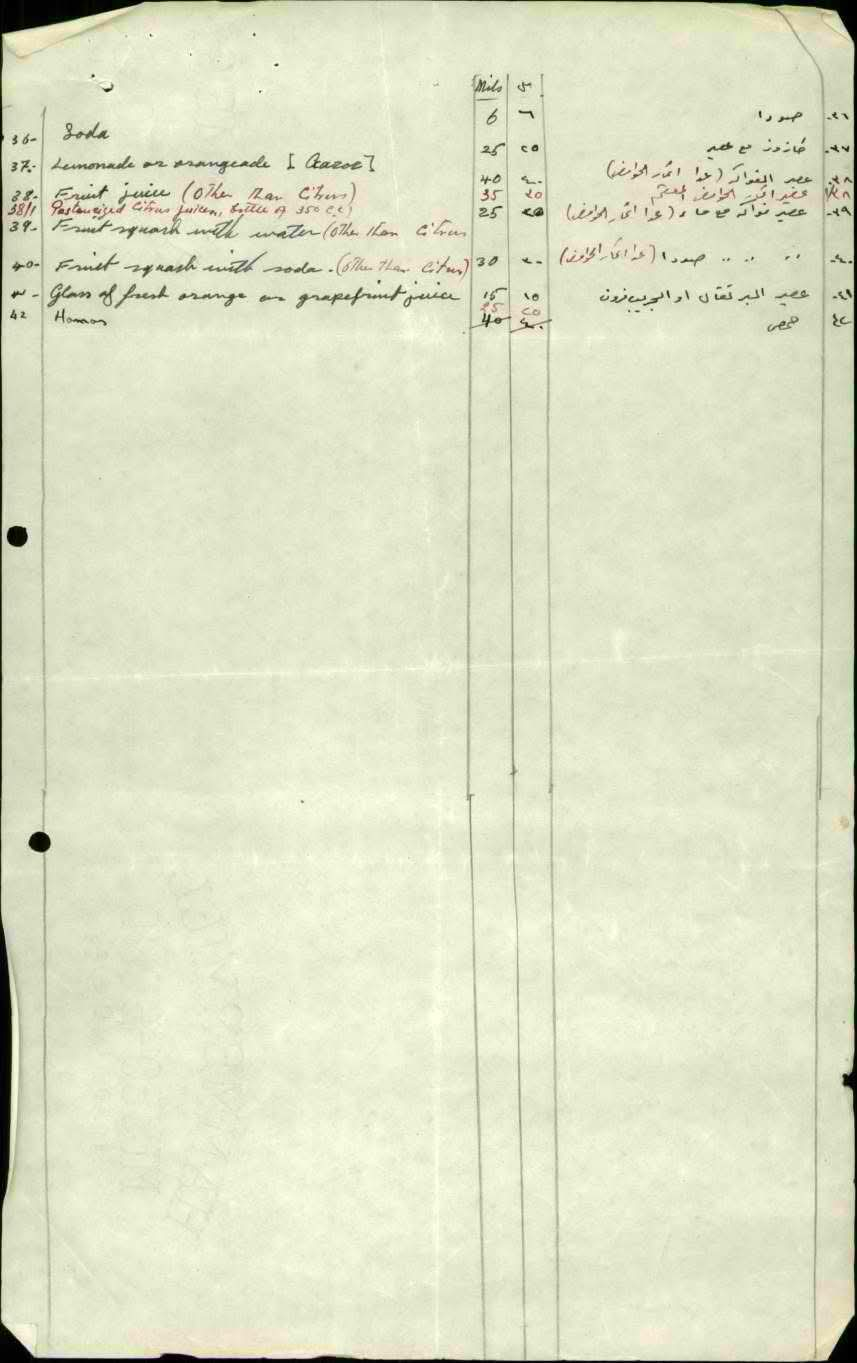
The numbering runs from 1 to 42 across the sheets, with items and prices arranged in columns. Before considering individual dishes, this layout deserves attention: it offers units of sale, including portions, glasses, bottles and meals, in a form customers could compare.
Some entries include alternatives, giving the numbering a practical role in organising orders. The format documents an important aspect of professional hospitality: linking an item and its unit of service to a stated price.
Breakfast as a meal and as separate components
The opening entry describes breakfast with an egg, tea or coffee and a sandwich, with a readable price of 65 under Mils. Separate portions of bread, butter, jam and honey also appear, alongside several egg preparations.
An entry specifying three slices of bread is priced at 8; butter at 15; and jam and honey at 10 each. These examples illustrate the attention given to portions and separately priced components.
The coexistence of a combined breakfast and individually priced components suggests different forms of ordering within one establishment. This arrangement highlights the flexibility of service and ordering.
Local foods alongside a wider repertoire
Readable entries include labneh, cheese, hummus, kebab, ful, sardines and fish, alongside puddings, pancakes, ice cream and milk, fruit and soda drinks.
This range brings local foods alongside names and serving formats circulating across borders. It presents the Safad restaurant as a meeting place for local tastes, products and culinary ideas.
Its wider relevance lies in showing how local products and transregional names or serving formats can coexist in a specific setting. Food history gains detail when it examines such encounters rather than assuming a cuisine remained unchanged.
Two languages for ordering
Arabic and English occupy approximately facing columns, with differences in wording and detail. This supports the conclusion that the menu was intended to be usable in both languages. The bilingual format also gives the menu a linguistic and organisational role in hospitality.
Some terms require caution: product names may be transliterated and the two versions may not correspond literally. The original image remains the reference when a reading is uncertain; a familiar modern name should not silently replace a difficult historical entry.
Prices and the limits of comparison
The English price column is headed Mils. Readable examples include tea at 20, coffee at 23, lunch or dinner at 100, fish at 100, and kebab with salad at 90. Any overwritten or unclear numeral requires consultation of the image.
These figures allow internal comparison: the meal listed at 100 costs five times the tea listed at 20. They do not establish whether the restaurant was inexpensive or luxurious, or what its prices mean in present purchasing power. That would require securely dated currency, wages, comparable prices and portion sizes.
Price differences cannot be treated as direct measurements of quality: quantity, service and accompaniments may also matter.
A record of professional food service
The document preserves details meaningful to contemporary cooks: specified quantities, alternative preparations, the organisation of beverage service and separate or combined orders. These details open a perspective on the organisation of work between kitchen and dining room.
The menu belongs within an archive of Palestinian urban life. Read alongside newspaper advertisements, market photographs and family accounts, such documents build a richer history of people, work and taste.
The menu offers a tangible view of urban life: breakfast ordered, portions defined, drinks priced and choices written in two languages. It cannot summarize Palestinian culinary history, but it preserves details that recipes alone rarely retain.
The source document: both menu sheets
Source and reading method
Primary source: the two menu images supplied to the magazine, numbered continuously from 1 to 42, with accompanying information identifying Safad, 1946 and the named proprietors. This article examines dishes, prices and the organisation of service. Edition prepared on 3 November 2026.
Read the companion article in this series
Suggested citation
Al Hasassna, A. (2026). At the Table in Safad, 1946: Reading a Restaurant Menu as Palestinian Food History. Edition 1.2. IUOAMC MEDIA Magazine, International Union of Arab Master Chefs. Original text: Ahmad Maher Abu Bakr; language editing and rewriting: Ahmad Issam Maadarani. IUOAMC-ART-2026-8505.
At the Table in Safad, 1946: Reading a Restaurant Menu as Palestinian Food History
Open the WICP record and verify its details · WCIP-MEDIA-2026-0002
Cite this reference
Version 1.2
Published update history
- · Version 1.2
Editorial review, publisher and contributor details, citation, direct WICP linkage and retained language-edition fingerprints.
- · Version 1.1
Public wording revised; language-editing and rewriting credits and a WICP article record added.
- · Version 1.0
First edition: Arabic rewriting and language editing, English and French translation and review, image and source documentation, and attributed supplied provenance.