Palestine’s Food Landscape: Water, Milling, the Olive Harvest and the Port of Jaffa
A documentary historical study — Palestinian food memory
Download article PDFIn this article
 Scan to verify the article
A historical reference published by IUOAMC
Publisher: International Union of Arab Master Chefs (IUOAMC) · IUOAMC MEDIA Magazine.
Series: Palestinian Food Memory · Editorial edition: 1.2 · Article code: IUOAMC-ART-2026-8504.
Language editing and rewriting: Chef Ahmad Issam Maadarani
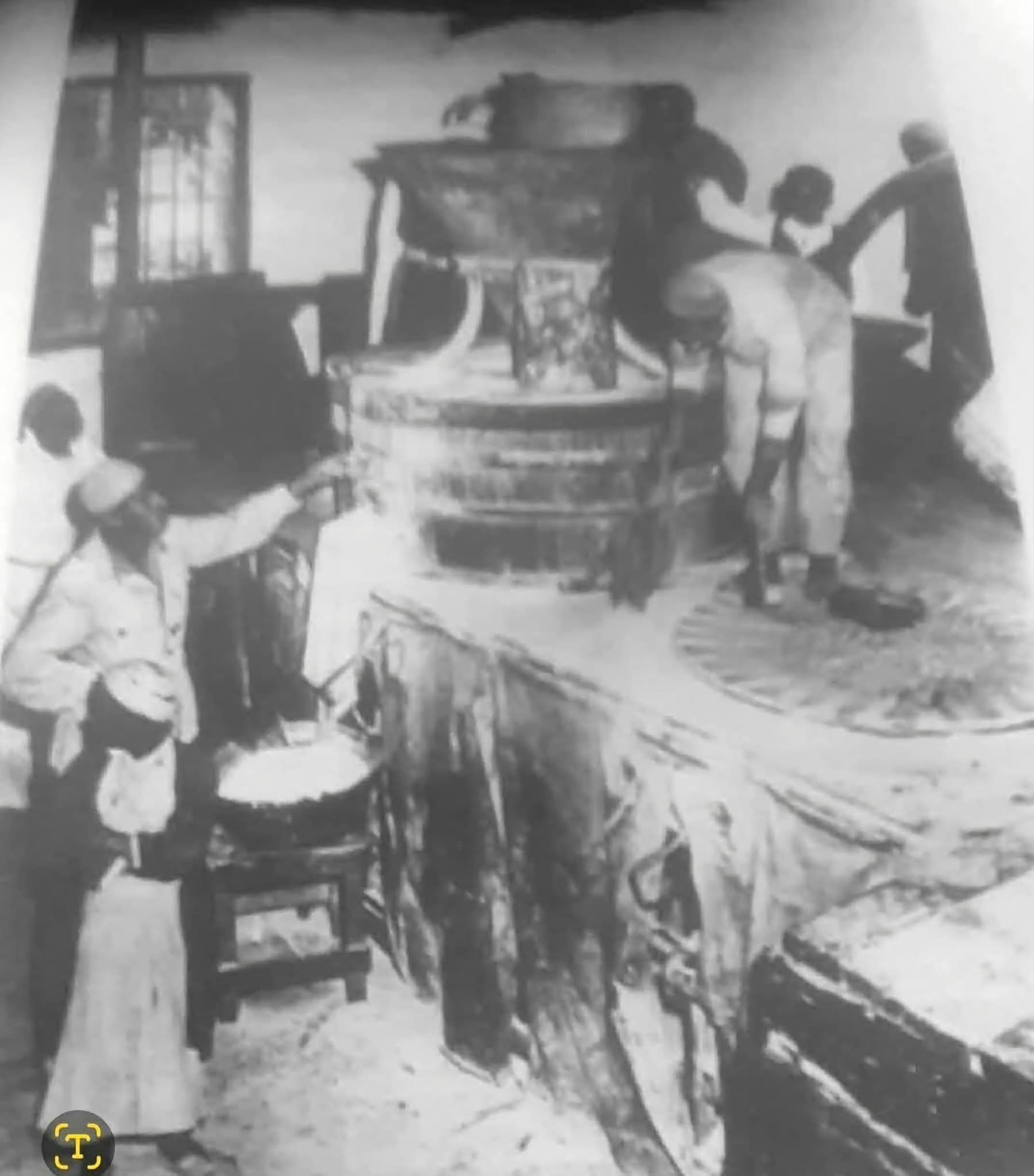
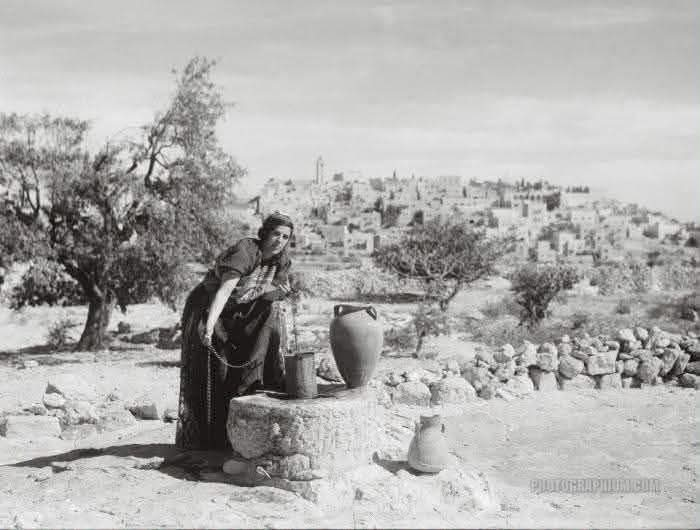
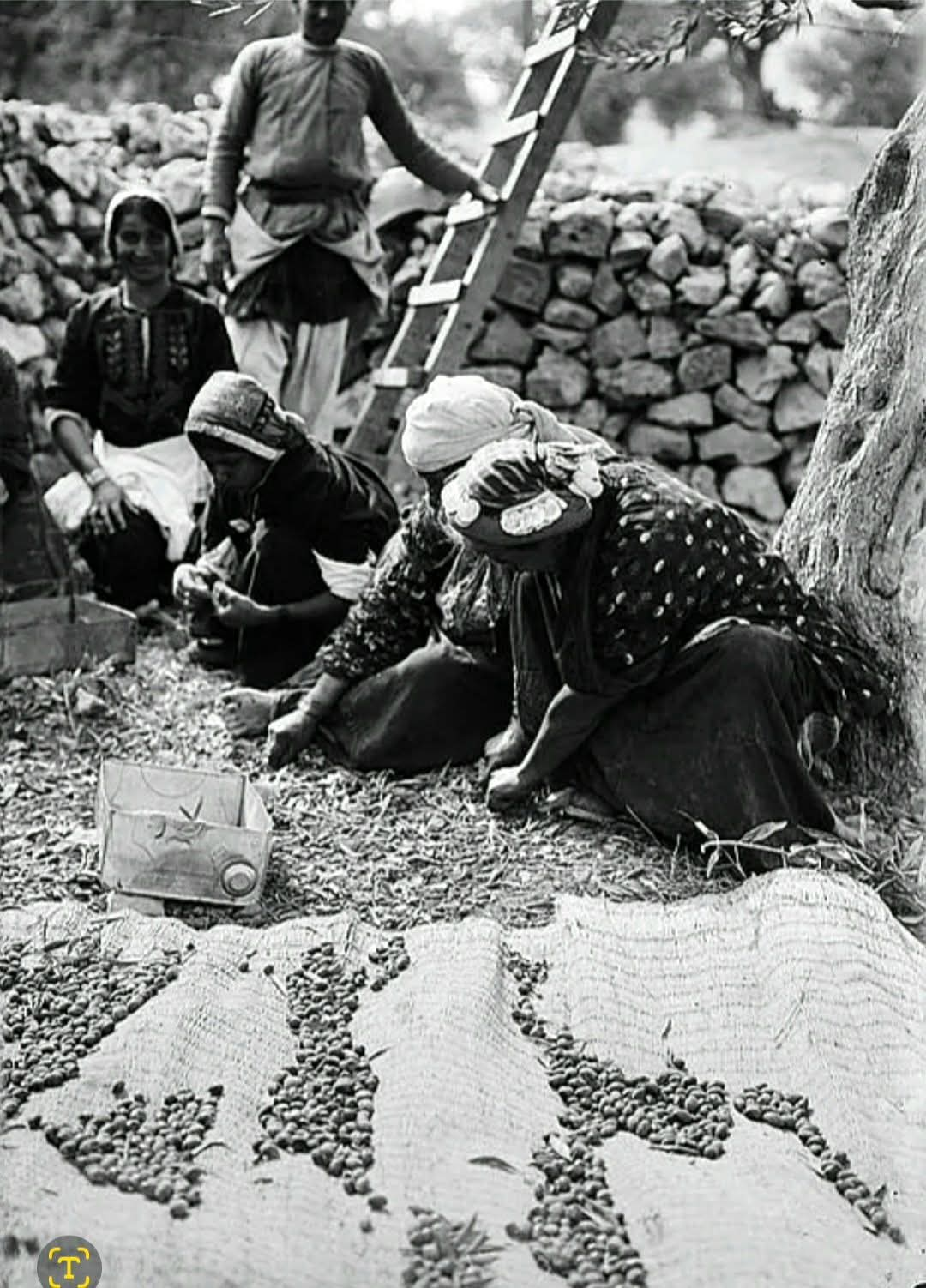
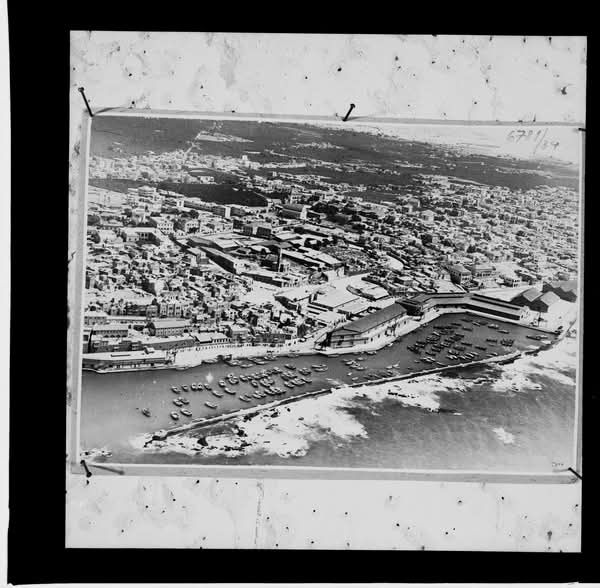
Food reaches the table through work that recipe histories often leave outside the frame: obtaining water, processing crops, moving goods and preserving supplies. This article examines four images associated with Palestine: a milling scene from the Bayt Jibrin group, a woman at a water source in Bethlehem, an olive-harvest scene and an aerial view of Jaffa’s harbour.
The article asks how everyday labour and material infrastructure shaped Palestinian food life. It places Palestinian places, tools and skills within Mediterranean and global food history.
Water: the kitchen’s least visible ingredient
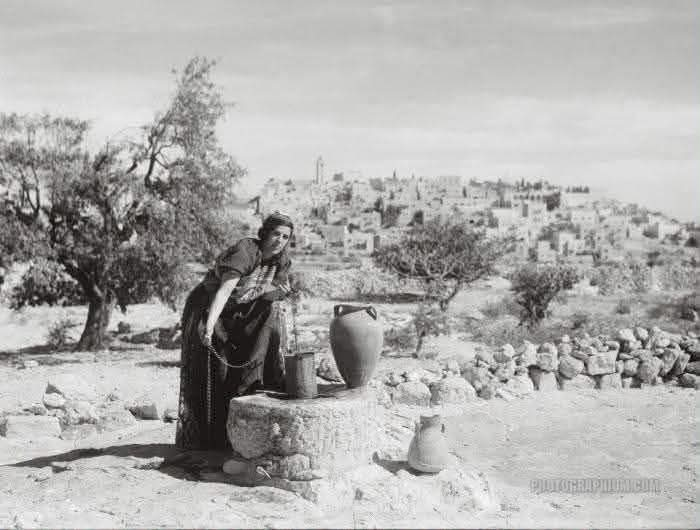
The Bethlehem image shows a woman beside a stone opening, with vessels nearby and the town in the distance. It directs attention to the work of obtaining water before mixing dough, cooking or cleaning: an essential part of the daily organisation of food.
For wider archival context, the Library of Congress holds a sequence showing a woman identified as Sofie at a well south of Bethlehem, dated 23 September 1938 [1]. This material opens a perspective on water, settlement and everyday life in the town.
Studying water expands the history of culinary skill to include carrying, allocating and managing resources. The woman’s presence brings into view work that sustained the routines of household life.
Milling: understanding the material before the recipe
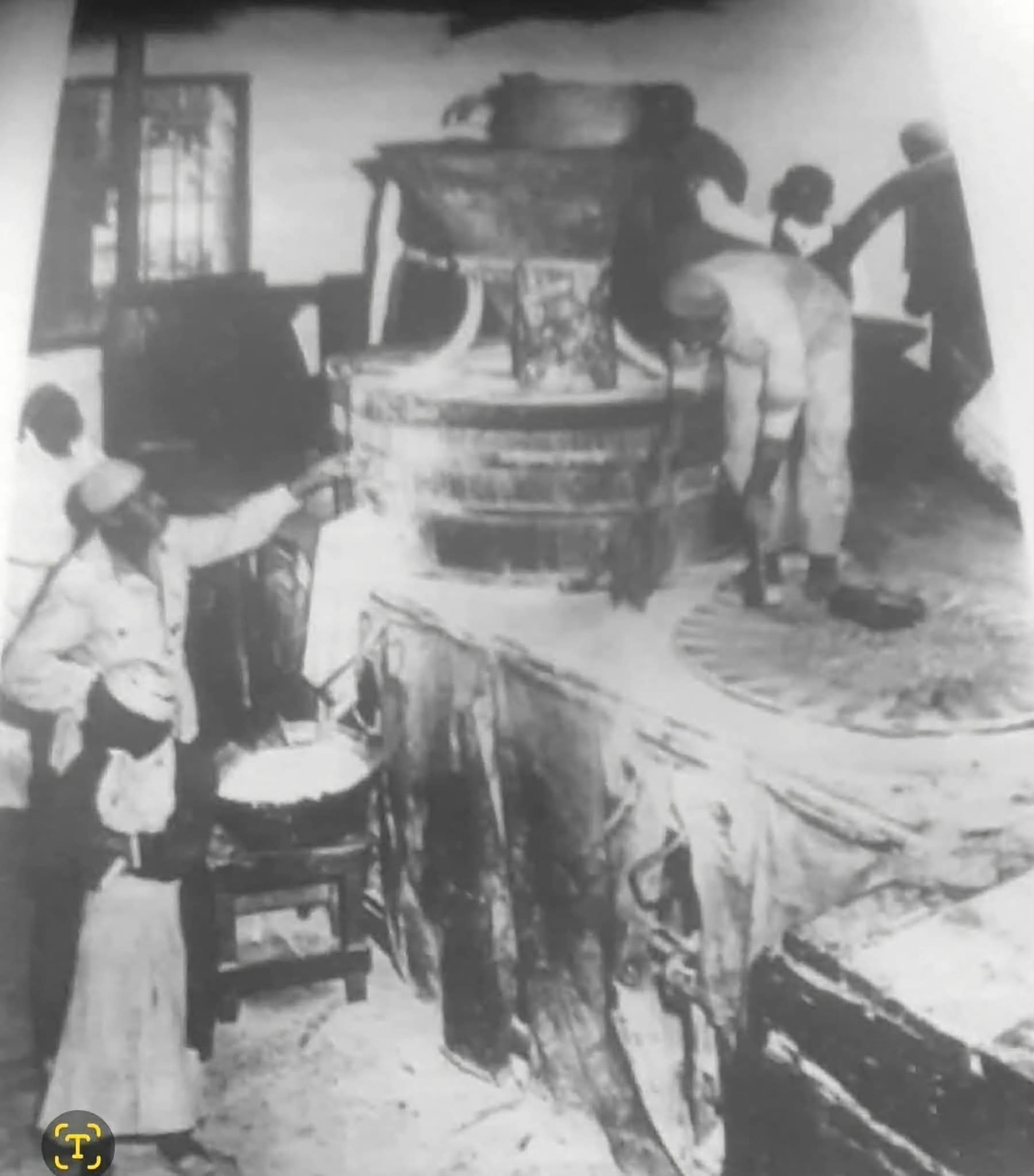
The milling scene from the Bayt Jibrin group shows a large circular installation and people working around it, with material and containers at a lower level. It brings attention to processing before cooking: transforming a crop through labour, experience and tools into material used for food.
Suad Amiry and Vera Tamari’s The Palestinian Village Home examines domestic buildings, tools, storage and food production together [2]. This perspective situates milling within household and village economies. Processing requires time, skill and maintained equipment; the resulting material’s texture matters to dough and cooking.
Olives: a crop made visible through shared work
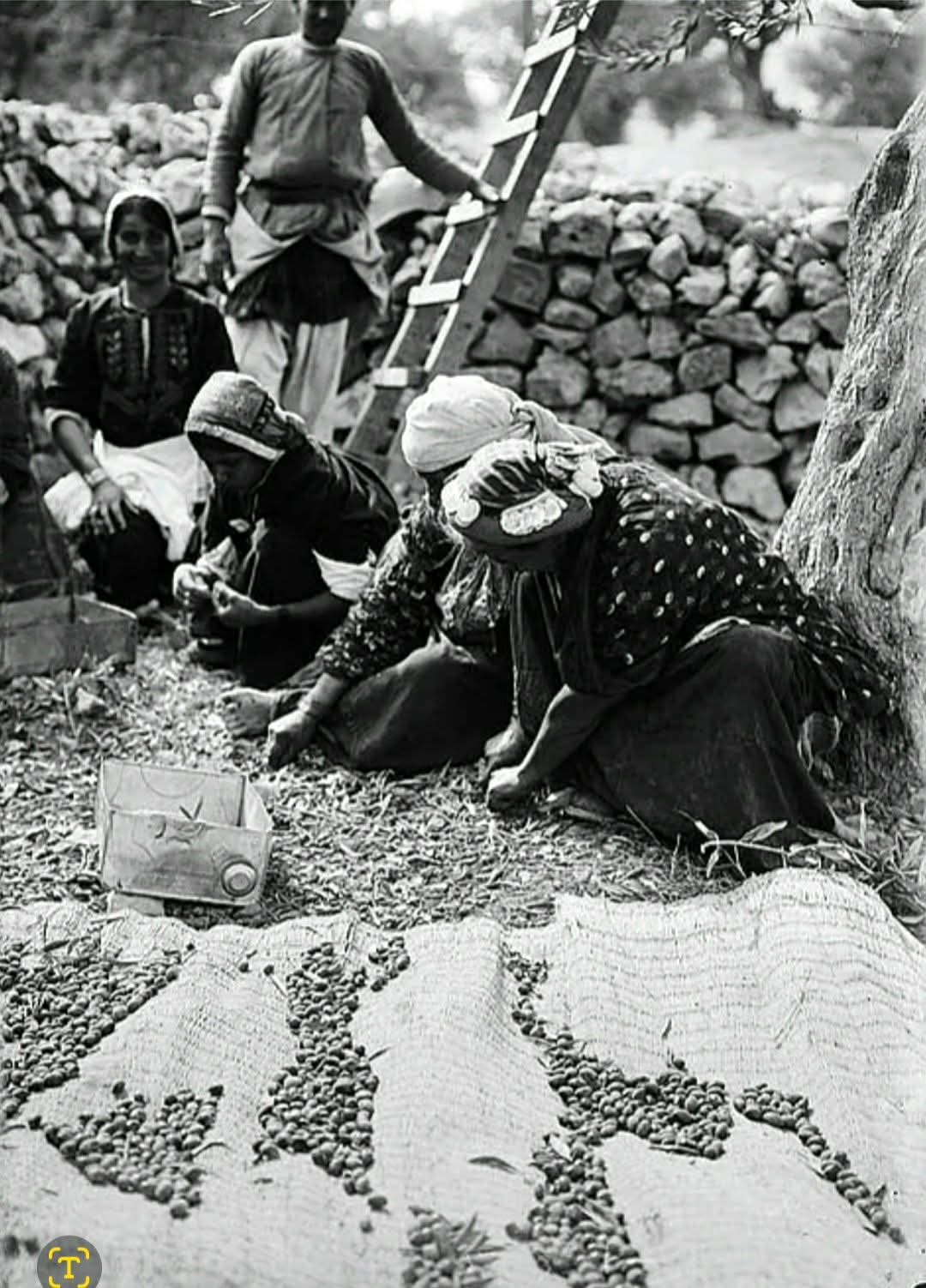
The harvest image brings together people working beside a tree, a ladder, vessels and fruit on the ground. It reveals the labour behind an ingredient before oil becomes part of a dish, bringing the collective work of rural Palestine into focus.
Amiry and Tamari describe family participation, ladders, baskets, sacks and fruit collection during the olive season [2]. The Palestinian Virtual Museum explains the technical distinction between crushing olives and pressing the paste to extract oil [3]. Together these references explain stages linking the tree, the press and the table.
Olives connect food with seasonal knowledge, collective effort, preservation and distribution. Examining these relationships deepens our understanding of oil in everyday life and of the skills involved in its production and circulation.
Jaffa: a food landscape connected to the world
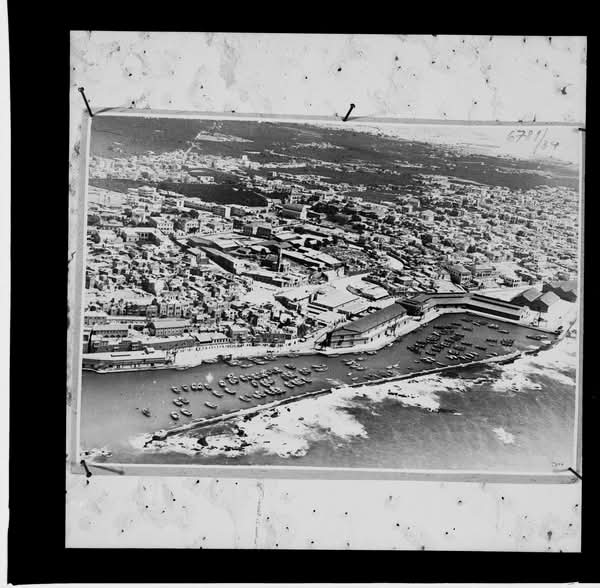
The harbour image introduces boats, quays and buildings into the history of food. The supplied date is 1937; the Library of Congress also holds aerial photographs of Jaffa and its breakwater from that year [4].
Separate photographs of packing and exporting Jaffa oranges document the relationship between agriculture, handling and overseas markets [5]. They enrich the reading of the port as a link between agricultural production and commercial labour.
The table thus belongs to relationships among growers, labourers, carriers, traders and cooks. Jaffa offers a concrete entry into international discussions of ports and food circulation while retaining the specificity of Palestinian places and livelihoods.
What these images contribute
The article connects resources, processing, seasonal labour and circulation as complementary dimensions of food history. Together, these scenes show how the story of a meal begins well before the cooking fire.
Their value lies in returning recipes to the conditions of production: water carried, crops processed, fruit gathered and goods moved. Palestinian culinary memory survives in tools and skills as well as dishes, giving people, places and working knowledge their place in the historical narrative.
Documentary album and captions
Sources and historical context
- Library of Congress — Bethlehem, Sofie at the well, 23 September 1938
- Suad Amiry & Vera Tamari — The Palestinian Village Home, RIWAQ edition
- Palestinian Virtual Museum — olive trees and olive presses
- Library of Congress — Air films (1937), Jaffa breakwater, matpc.17058
- Library of Congress — Jaffa, packing and exporting oranges, matpc.06237
Images and accompanying dates and locations: the collection supplied to the magazine for this article. Supporting references expand the historical context of agriculture, water, labour and trade in Palestine. Edition prepared on 3 November 2026.
Read the companion article in this series
Material prepared by the Kanaan Culinary Team — Palestine
Contributing Kanaan team members and their roles:
- Chef Ahmad Maher Abu Bakr · MC5585MS — original text.
- Chef Mais Barahmeh — team general management.
- Chef Ahmad Al Hasassna · MC6388MS — team adviser and preparation of the published article.
Language editing and rewriting: Chef Ahmad Issam Maadarani.
Suggested citation
Al Hasassna, A. (2026). Palestine’s Food Landscape: Water, Milling, the Olive Harvest and the Port of Jaffa. Edition 1.2. IUOAMC MEDIA Magazine, International Union of Arab Master Chefs. Original text: Ahmad Maher Abu Bakr; language editing and rewriting: Ahmad Issam Maadarani. IUOAMC-ART-2026-8504.
Palestine’s Food Landscape: Water, Milling, the Olive Harvest and the Port of Jaffa
Open the WICP record and verify its details · WCIP-MEDIA-2026-0001
Cite this reference
Version 1.2
Published update history
- · Version 1.2
Editorial review, publisher and contributor details, citation, direct WICP linkage and retained language-edition fingerprints.
- · Version 1.1
Public wording revised; language-editing and rewriting credits and a WICP article record added.
- · Version 1.0
First edition: Arabic rewriting and language editing, English and French translation and review, image and source documentation, and attributed supplied provenance.